Men and Jewellery Through the Ages
I was prompted to look into the phenomenon of men and jewellery because in a book I am reading, set in ancient Rome, four rings were taken from the hand of a dead senator and dropped in the Tiber. All through the book I read that the Emperor wore a wreath and a huge gold ring, senators wore a gold ring, and slaves and freedmen alike wore wrist cuffs — so at every level of society men wore jewellery almost as much as women did.
Going Back to the Beginning
I needed to go further back before I carried on forwards — back to the very origins of jewellery, really — to see where it all began and whether men have always worn jewellery, and why. That took me to about 110,000 years ago and a necklace of shells found in Israel. There is no knowing whether it was worn by a man or a woman, but it is a clear indication that there has been a significance to jewellery for a jolly long time.
In Africa, men have always adorned themselves. It indicated status, power and wealth, mostly, but it was also full of medicine and good fortune, strength and prowess. The same can be said for South Americans (who had gold long before just about anyone else), the Australian Aboriginals, and the American First Nations. Bone, feathers, teeth, stones, leather and beads all combined to make powerful adornment for powerful men.
Egypt, India and the East
Fast forward to the Egyptians. Not only did the Egyptians love jewellery, they were really very good at it. Gold was naturally reserved for the Pharaohs and their queens, and the populace had to make do with bronze and other base metals until silver was imported to Egypt and became available and affordable for regular citizens. The Egyptians loved coloured stones — but more than just for aesthetics, their stones were very powerful. They protected against illness, brought luck, wealth and love, and Egyptian jewellers paid enormous attention to the combination of stones used in their work, especially for the Pharaohs.
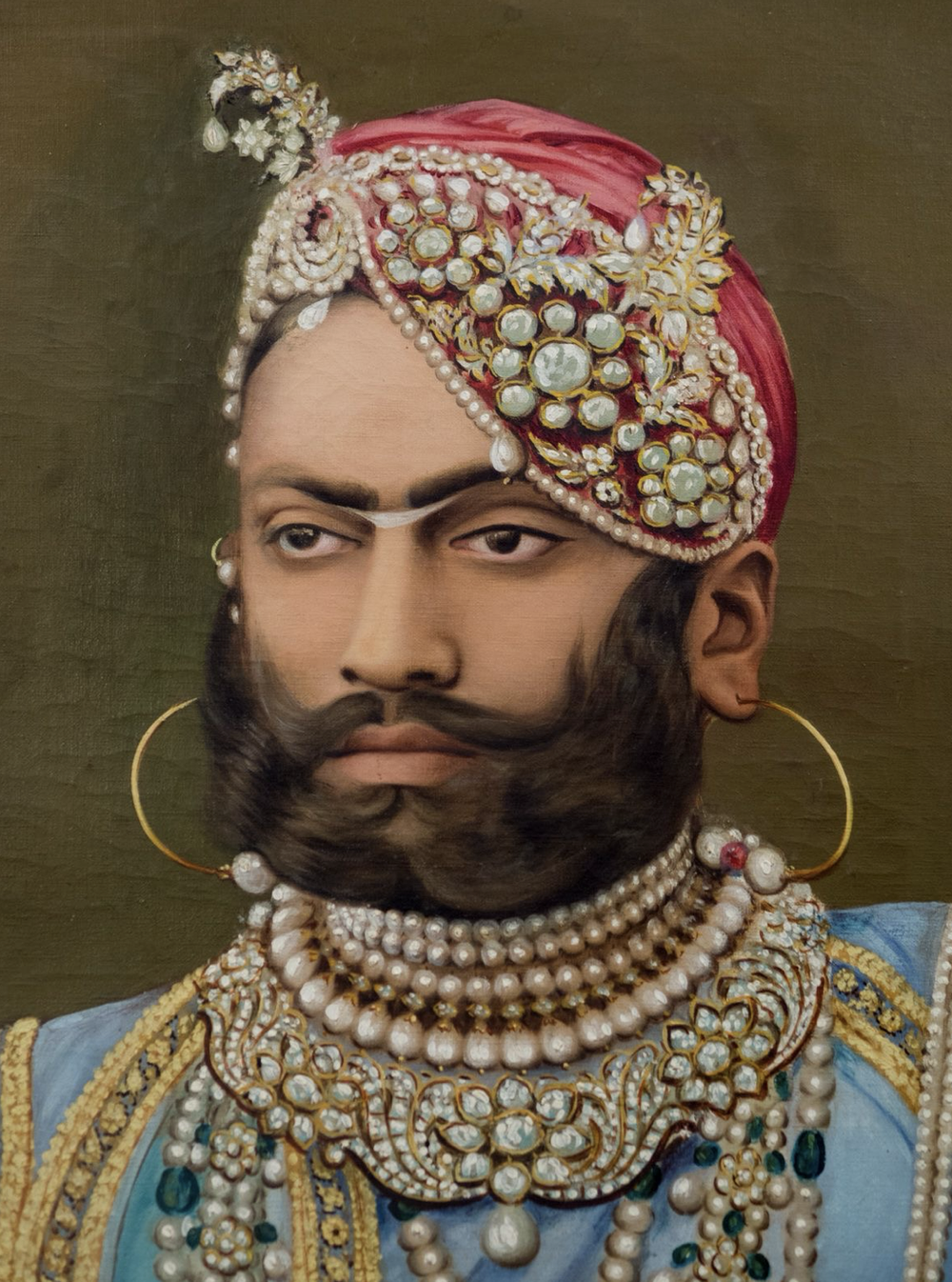
In India the significance of jewels was quite different. The maharajas spent an extraordinary amount of money on their jewels, and while jewellery's main function in India was to make one's status completely clear, there was huge religious significance attached to it too. Different deities were attached to different stones, which is why so much Indian jewellery has so many different coloured stones in it. And only the maharaja — and icons in temples — were allowed to wear gold on their feet.
Napoleon, the Victorians and the Great Recession of Men's Jewellery
Then we take a giant leap forward to Paris and Napoleon. Paris has always been the beating heart of fashion for the western world, with enormous influence. After the Napoleonic wars the country was broke and people had very tight belts. Swaggering around in jewel-encrusted waistcoats and diamond rings became very frowned upon, and men began reducing their jewellery to the bare necessities — one or two rings, a cravat pin, a watch on a chain, perhaps. The recession in men's jewellery had begun in the west.
Fashions changed and men moved away from silky knickerbockers and buckle shoes into more austere suits. Here come the Victorians — and their jewellery reduced even further. A signet ring and a fob watch would do. And that is where it stayed for quite a long time: a signet ring to show off your family connections, and a nice watch. Cufflinks were very popular from about the 1920s, but more money was being spent on women's adornment than men's, by a long way.
A Modern Revival
Men have never stopped wearing jewellery, and it seems to be having a resurgence in popularity. Performers are notorious for their bling — Liberace, Elvis, Elton John — but I think that was more to do with eccentricity than power and status. Then I read that in the world of rap musicians there is a definite rule about the amount of bling you wear: it is not acceptable to out-bling the biggest and most successful rappers, even if you could afford to. So we are back to the power and status idea in evidence from the very beginning.
But in general now it is not just about power or spare cash. A lot of modern men wear a single bracelet, one earring, or a chain and pendant — all understated and, frankly, very manly. In my family it is the men of the younger generations who wear jewellery now. My father and brothers never wore any, but my sons and son-in-law wear wedding bands and other rings comfortably and unselfconsciously. There are also jewellers who specialise in affordable — and really quite nice — men's jewellery: pendants, chains, rings, earrings — the works.
Pakal the Great, Jack Sparrow, Kanye West — they all had, and have, their reasons for adorning themselves. But then there have always been boy magpies, too.